

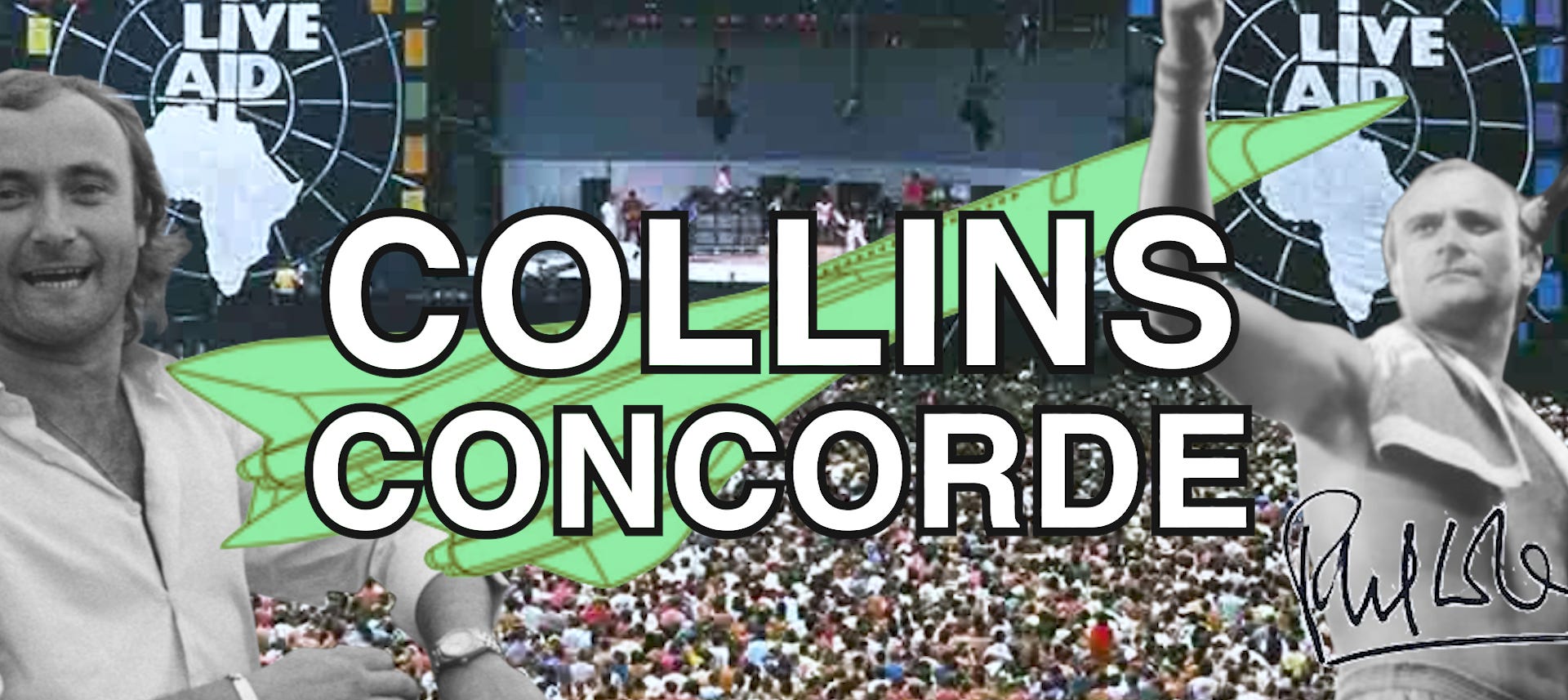
Collins Concorde
Coming of age, learning how to make it and meeting your heroes in NYC: 1995-2005

Friday, July 28, 1995
Who schedules a meeting late on a Friday in late July? Normally, I wouldn’t have cared too much. But, today I needed to get down to the Brooklyn Banks to meet these skaters who said they would sign some decks for me. A bunch of them were in this movie, Kids, that was about to hit the theaters. The hype around it was ridiculous. These Kids kids were already difficult to track down. After today, it would be impossible. If I didn’t catch them at the Brooklyn Banks I’d be screwed.
Kids was directed by Larry Clark, this older photographer known for Tulsa and Teenage Lust, books with images of underaged sex, guns and heroin. Kids featured underaged sex, skateboards and AIDS. I skated at LOVE Park in the 215 during high school. If Clark had showed up and asked my crew to take our shirts off, do drugs and have sex with our girlfriends we would have freaked out and run home. Philly Catholic school boys had a sense of propriety. Clark was often accused of being a pervert or pornographer. He might be, but he was also considered an artist. That’s the beauty of the art world. As long as someone calls your work art, you get away with it, at least in NYC. I didn’t care either way. I had to get to the Banks before the skaters said laterz.
I entered the conference room with a bunch of Zoo York decks sticking out of my messenger bag. I wanted it to be clear I had other places to be. Irina Bernal-Smith paused as I sat down, then she continued.
“…I gave her all these opportunities and tried to promote her career. Now she won’t even talk to me. I think she’s depressed and addicted to prescription pills.” Irina sighed and put her hands in her lap. Jay Jefferson, the grant administrator, tilted sideways in his chair, rubbed the back of his head and looked at me. I didn’t know what to say. I wasn’t even sure who Irina was talking about. “She may file a workplace harassment complaint. It doesn’t have to be sexual for someone to do that. It can be for a hostile work environment. I think she was obsessed with me. The whole thing is so strange.” She had to be talking about Celia Shore, a junior producer who stopped coming to the office a few weeks back. Celia was around the same age as me, with long black hair, porcelain skin and light green eyes. Sometimes she looked stressed out, but everyone with an underpaid job in downtown NYC looked stressed out. Celia only worked on Irina’s projects, so we rarely interacted beyond polite greetings.
The most time Celia and I spent together was on a red-eye flight from Los Angeles to New York. We had all gone to LA to attend this GLAAD Media Awards show. I didn’t go to the event, but was happy to have free airfare to meet West Coast connections. On the flight back, Celia’s seat was near the front of the economy section. She waved at me to take the empty two-seater in front of hers. It seemed churlish not to move up. I said thanks, she said no problem and that was it for chit-chat. A couple hours later, I’d finished dinner and was watching The Brady Bunch Movie when the plane, without any warning, dropped out of the sky. Everything not buckled down, including me, slammed into the overhead compartments. My butt landed on the arm rest and snapped it off. It felt like we were nosediving to the earth.
Celia reached her hand between our seats and I grabbed it. We held onto each other for what we thought would be the last moments of our lives. I rested my cheek against the back of her hand. After 10 of the longest seconds of my life the plane stabilized. The pilot said we hit invisible turbulence and would be making an emergency landing in Chicago. Celia and I released our hands. On the ground, I lost track of her in the mess of EMS workers with stretchers carrying out injured passengers. I decided to catch the next available flight to New York. As the plane took off, I started to panic. What the hell was I doing? I wasn’t Latrell Sprewell racing back to New York for a Knicks game. I could have chilled out in Chicago for the night. I thought about resting my cheek on Celia’s hand. We never talked about it again. Why relive a such a horrible experience?
Silence settled over the meeting. I stood up and said I needed to jet. I ran downstairs to catch a 6 train. As I sat on the subway I thought about what Irina said. It was hard to believe anyone, especially a seemingly normal person like Celia, would be obsessed with her. I jumped out at the Brooklyn Bridge stop. I didn’t think about the meeting again until much later.
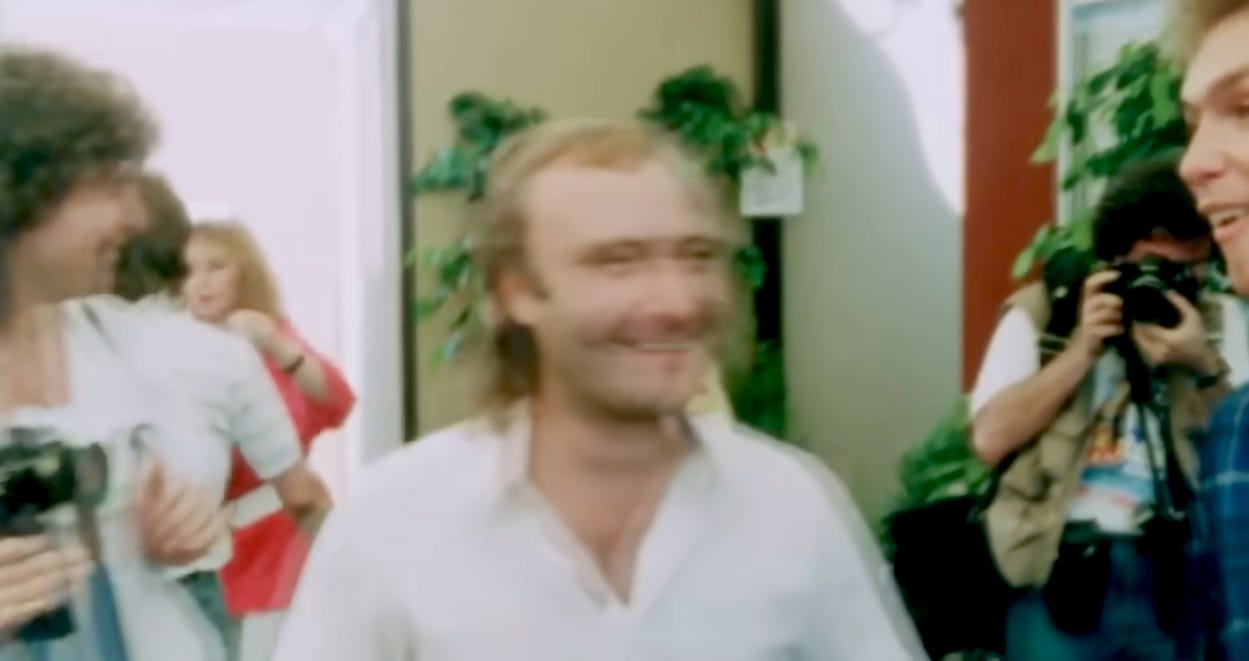
Hi, I’m Dan. I was named after my uncle, but since he’s not my father I’m not Dan Jr. To the extent I even understand it, I’ll try to give you the 411 on how I got here. If you look closely at the end of Live Aid Concert (on the 3rd DVD in the box set), you’ll see Phil Collins walking offstage in Philadelphia. He stops to sign a Live Aid t-shirt that some kid handed him. That kid was me. My Uncle Dan, a union electrician at JFK Stadium, got me an all-access pass to the show. He knew I really loved Phil Collins. His soulful voice and heartfelt songs (solo and with Genesis) were my emotional support jams. In seventh grade I had crushes on all these girls, but none of them felt the same about me. It wasn’t their fault. I didn’t know how to express my feelings. I thought if only we could listen to Phil Collins, while gazing into each other’s eyes, it would all work out. I didn’t know it then, but that moment with Phil Collins would change my life.
In college I got into art, but couldn’t draw. I loved music, but could barely play an instrument. I stood in the back at concerts and had imaginary conversations with the girls around me. Sometimes, I wondered if I was screwed for life for being a Phil Collins fan. He was balding and had a mullet. It made him seem like a nice and normal guy. I considered myself a nice and normal person, but I didn’t write hit songs or have a mullet. In my studio art class this young woman, Saskia, talked about how the commodification of music made it impossible for artists to achieve any social good without primarily promoting themselves. Usually I didn’t speak up, but this was close to my heart. I rebutted her by saying Live Aid was successful, in terms of raising money for a good cause. She said it enriched the record companies and promoters, not the people it was meant to benefit; the developed world would always fail in its attempts to ‘save’ the developing world. I wasn’t sure if she was right, but she made me rethink Live Aid.
I thought it was heroic that Phil Collins performed in London, then flew on the Concorde, a supersonic jet, to play Live Aid in Philadelphia. Now, it seemed corny. The next day in art class I brought in a photocopy of the Concorde. I traced it on top of a sheet of Mylar and cut out a stencil. I used the spray gun to paint the Concorde on my Live Aid concert t-shirt, right over Phil’s autograph. I wasn’t even thinking; I just did it. Saskia stared at it and nodded. I liked watching her cheekbones move up and down. We went out for drinks after class. She said liked my bunny-cat drawings (imaginary cats with bunny ears, bunnies with cat tails, etc.) but felt there was enough of that being done by Mike Mills and Poot in NYC and Mike Kelly in Los Angeles. I didn’t know any of those people. She said the Collins Concorde thing was fresh and urged me to iterate and explore how I felt about it. I’d never heard the word iterate before, but I was pretty sure it meant I needed to get more t-shirts.
That weekend, I visited my Uncle Dan in the suburbs north of Philadelphia. He was retired now, but still a hoarder. Hoarder’s never retire. In his defense, he only hoarded cool stuff, not random junk. He introduced me to his new girlfriend, Linda. They’d met in a Hoarders Anonymous chatroom on AOL. I asked him if he happened to have any other Live Aid t-shirts. He said he did and that I could take them and any of the other t-shirts in the basement. I was shocked. Usually, he’d say he still needed his stuff, for obscure hoarder reasons. Linda was clearly exerting a positive influence on him. There were two boxes of Live Aid shirts and a mind-boggling mix in 25 other boxes: The Stones (Tattoo You and Steel Wheels tours), The Who (Farewell Tour ’82 and ‘89) Rick James, Loverboy and Philly heroes, The Hooters (Nervous Night Tour ’85). I grabbed the Live Aid boxes and told Uncle Dan I would be back for the rest. Linda hugged me when we said goodbye. I got choked up as I watched them wave from the front steps as my taxi drove away. I was happy Uncle Dan found someone who ‘got’ him. If I could write a Phil Collins-style song it would be about how life is better when you’re with someone nice. All it takes is one good person.
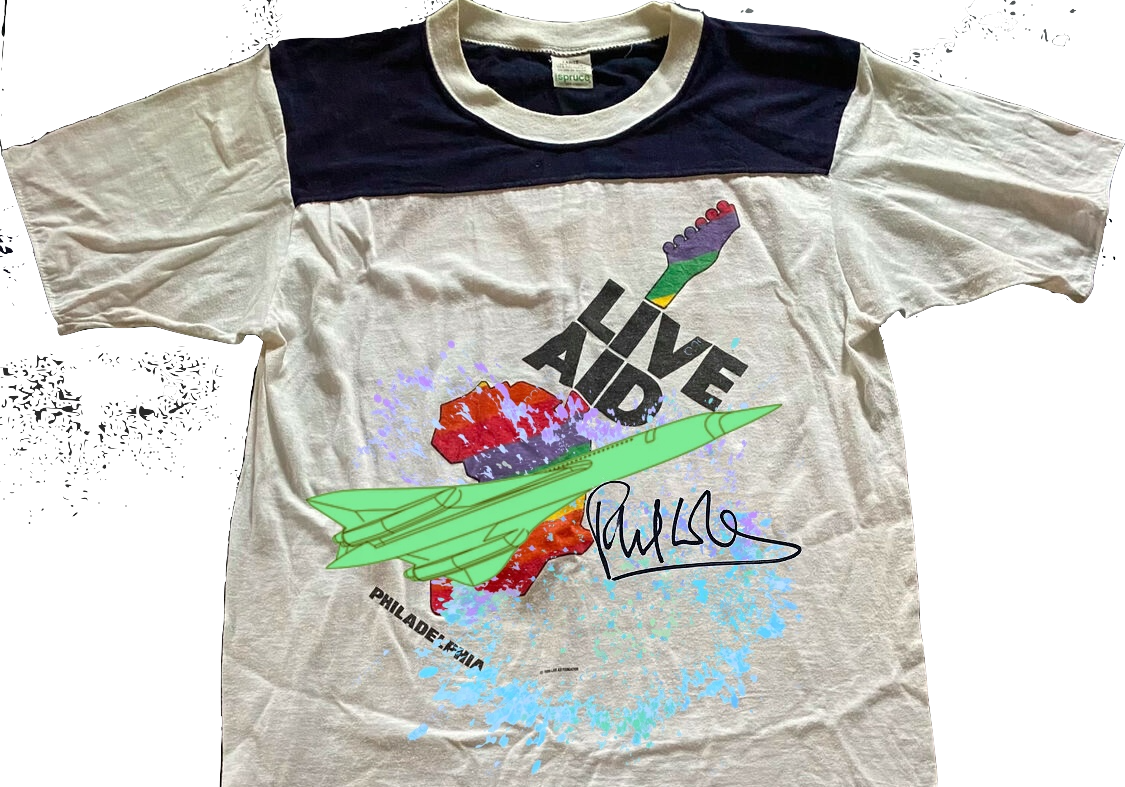
Taking Saskia’s advice, I iterated; trying different colors and Concorde stencils on Live Aid shirts. The ones I thought looked ‘bad’ ended up looking better than the ‘good’ ones. I tried to make more good-bad ones, but they turned out bad-bad. On the last day of class, I gave an oversized Collins Concorde shirt to Saskia. She held it up, nodded, then pulled a five dollar bill out of her jeans and stuffed it in my shirt pocket. She pulled me towards her and whispered in my ear, ‘you’re an artist now’. Dazed, I thought ‘I am?’. After graduation Saskia moved to Boston. She was destined for cooler pastures, like being a painter or playing bass in a band. I planned to move to New York City. A friend said I’d never see Saskia again because that’s how it was with Boston and NYC. I was from Philly, a city you either never left or never returned to once you left. Despite what Saskia said, I didn’t think I was an artist, but maybe I’d become a decent merch guy.
In New York, while figuring out what I wanted to do, I did things I didn’t want to do, like working as a law clerk, bartender, selling antiques, delivering Mexican food, you name it. I went to a lot of concerts, stood in the back and had imaginary conversations. After seeing Cake at Irving Plaza, I ran into my friend Moon on Avenue A. He said he was on his way to see me.
“Mark Sandman of Morphine wore your Live Aid t-shirt on MTV tonight. He name-checked you as the artist! He said the shirt was a statement on the commodification of music. My friend Scooter called to say MTV wants to interview you.”
It took ten years, but this was how Phil Collins changed my life. Morphine were a band from Boston. Saskia must have loaned Mark Sandman the shirt and told him about me. A week later I appeared on MTV’s 120 Minutes wearing the original Collins Concorde shirt. I told the VJ, Karyn Stewart, how my friend, Saskia (who I hoped was watching), inspired the design. I said I believed artists had good intentions when it came to using their music to raise money for worthy causes, but the industry and even the charities failed them. Going out on a limb, I said I would sell the shirts and give the proceeds directly to people in need; whether they were in Africa or in NYC. She asked me for contact information in case people wanted to buy a shirt or make donations. I froze and said I was working on that. It was awkward, but true. Karyn laughed, said ‘okay then’ and wrapped up the segment.
MTV News replayed the interview and made me out to be someone I never claimed to be, a kind of slacker spokesperson. People started calling my home phone number and filling up my answering machine. Others slid notes under the front door of my building. It was so weird. I started wearing a wig with a wool hat pulled over it and walked down the other side of my street to make sure the coast was clear. I could have disappeared to Philly until the hype died down, but I was determined to do what I said I was going to do. My cousin, KJ, Uncle Dan’s son, lived in Nairobi, Kenya. He worked for the US State Department. If you’re wondering how he got a cool job working in Africa, it’s because he spent his entire youth planning to escape his hoarder dad’s house. I figured I could wire him money from selling the t-shirts. He could distribute it to needy families in Kibera, this huge unplanned settlement on the outskirts of Nairobi. When I called to explain the idea, KJ said no frigging way. It’s not that he was uncharitable. He was worried about being robbed or killed if locals thought he had a stash of money. Also, if anyone at the State Department discovered he was handing out cash it would create a shit-storm and undermine the millions they spent on foreign aid.
My plan B was to volunteer at God’s Love We Deliver (GLWD). They were a nonprofit that brought healthy meals to home-bound people with AIDS. I could bike around downtown delivering lunches and slip each person fifty or a hundred dollars. I quickly learned that was also a naïve plan. Most of their clients were bedridden and dying. None of them were going to take my money and pop down to the bodega for a 40 oz beer and a scratch card. Seeing people wasting away was heart-rending, yet their bravery and good humor in the face of death was inspiring. It was hard not to cry between meal drops. The worst was when I showed up at Jerry’s apartment and discovered he died that morning. His partner, Sal, told me Jerry was always happy to see me. I couldn’t hold back and started crying. Sal gave me a hug and thanked me. I thanked him for being there for Jerry. I wanted to say ‘one good person like you makes all the difference’ but he already knew.
When I couldn’t stop crying during my deliveries, my manager at GLWD ordered me to attend a grief counseling session. The meeting was at The Lesbian and Gay Community Center on West 13th Street. I went and felt like …a total imposter. I had this tiny experience and was in a room full of people who’d lost their loved ones or family members. Everyone was so friendly. When I confessed to a counselor about my plan to sell concert t-shirts and hand out money to people with AIDS, he didn’t judge or scold me; he said it was a wonderful gesture. He recommended I meet Jim Florent, a music industry guy who was on the board of The Center. I called him and we met the next day. Jim had been a longtime activist, going back to the Stonewall Riots. To him, my desire to work outside the traditional charitable fundraising system was completely normal.
“You’ve created a cool niche, but if you want to sustain it, there could be challenges. Consider reaching out to Irina Bernal-Smith. She founded PPAD, this art-centric nonprofit. She might be helpful. Watch out for her, though.” I asked him what he meant by that. He smiled and repeated that I watch out for her. I assumed it was one of those New York things; I’d have to figure it out as I went along. I thanked him for the encouragement — and the warning.
One welcome message on my answering machine was from Karyn Stewart. She called to say that all these artists wanted to buy my shirts. I called her back and said I only had one shirt signed by Phil Collins and I didn’t want to sell it. She said that was okay, the bands would probably prefer unsigned Collins Concorde shirts. That made me laugh.
“One last thing, MTV’s House of Style is shooting in Los Angeles. We want to fly you and your shirts out for it. Cindy will wear a shirt in one of the segments.”
“Cindy… Crawford?”
“How many shirts do you have?”
“About 45 Collins Concorde shirts and then 25 boxes of other shirts, with about 50 in each box.”
“That’s 1295 shirts, give or take. You could sell them for $500, at a minimum. That’s $647,500 in revenue. Even if you gave away, say 70, as promos, we could probably get one to Bono, you’d still clear $612,500 for charity.”
She was going so fast I could barely keep up. Bono was going to get a free shirt? U2 played Live Aid in London. I’d rather he signed the shirts than got a free one.”
“Do you need all the shirts now? I haven’t painted all of them yet.”
“No, just the Live Aid shirts. I’ll be in touch about the shoot dates.” After I hung up I thought about the numbers. If the t-shirts sold for $500 each or even half of that, I’d have to pay a huge amount of income tax. That freaked me out. I made an appointment to meet Irina Bernal-Smith.
We met at the Soho Grand Hotel. Irina (who I’ll refer to as IBS) was about 40, had short blonde hair, glasses and was clad in an expensive looking black wool poncho. Celia was there, too. After we were introduced, she didn’t say another word, but took copious notes.
IBS congratulated me on the Collins Concorde hype, then proceeded to tell me all the reasons why selling the t-shirts wouldn’t work. There were copyright issues with using Live Aid’s trademark. No reputable charity can give money away without a proper request for proposals (RFPs) system. Not to mention that an individual opens themselves to accusations of fraud and money laundering if they attempted to give money away to other individuals. The weirdest thing was how IBS said it was better to work with dead artists, because they were easier to manage. She claimed to be an expert who knew how to do all these things the right way; her way I assumed. She made me feel like everything I’d done was wrong, instead of the happy accident it was.
I told her I talked to MTV about making $600K from my t-shirt sales and they didn’t raise any of these issues. IBS said nothing and stared at the space above my head. I said I was interested in collaborating with an organization to sort out the legal issues; as long as I worked with them, not for them. Again, she stared at the space above my head. It was such an odd response. Another quirk of hers was agreeing with me, then flipping it to disagree. Every one of her sentences began ‘Yeah….no…’ I’d only ever experienced that with French people, who always seemed to be disagreeing with me.
My mind flashed to a college psychology class where I learned about personality types. I likely had Imposter Syndrome, which is feeling like you’re never good or smart enough. Its antithesis was the Dunning-Kruger Effect, aka Smartest Person in the Room Syndrome (SPITRS). That is a person who talks more than they listen and has a constant need to be right, even when they are completely wrong. I’d never met someone who fit that description, until now.
I got up, thanked IBS and Celia for their time and said I’d be in touch. The Collins Concorde thing was a random goof, rooted in my crush on Saskia. All I wanted to do was impress her – and have fun. I didn’t plan for it to end up on MTV. IBS planted all these seeds of doubt in my mind. I didn’t know how to start a nonprofit or give money away responsibly. Working with PPAD might give me a context to make cool things that helped people. That’s all I wanted to do. I ran on enthusiasm. I hated getting bogged down in negative vibes. I don’t know if that makes me immature or a happy-clapper, but it’s all I’ve got.
I went back to see Jim Florent to learn more about IBS.
“I became aware of her on the fringes of the downtown art scene in the late ‘70s. She would be at openings at Fun Gallery or 56 Bleecker. At some point she started presenting herself as an independent curator; offering to be a support system for artists. When East Village painter Robert Drazen died of a heroin overdose, IBS organized a farewell party in his studio. When a few drunk artist friends started scribbling poems on Drazen’s unfinished canvases Irina encouraged other, more famous artists, to do the same. Is it what Drazen would have wanted? Probably not, but he wasn’t around to object. Did the artists realize they were being goaded into making Drazen’s work potentially more valuable? Probably not. Irina was in charge of Drazen’s estate. This was an era when an artist’s work was thrown out on the sidewalk after they died of an overdose or AIDS. It was considered a good thing that someone was looking after his paintings.
A few weeks later, she curated a show called Dialogues at Fun Gallery, featuring the Drazen mash-ups. In her catalogue essay she evoked the halcyon days of Frank O’Hara and the painters and poets of the NY School who were known for their collaborations across artistic disciplines. Artforum issued a glowing review and claimed the show was what the art world needed to offset the greed and egotism of the 1980s. Irina established a nonprofit, Painters Poets Artists and Dancers (PPAD), to continue what she started with the show. She didn’t really give a shit about dancers, their work was too hard to monetize, but adding a ‘D’ to the name made the acronym sound less like other downtown nonprofits, like PAA, PPO or PDFA, etc. The downside was that some people referred to it s Pee-Pad.”
Jim explained that PPAD’s mission statement claimed they would curate and sell limited art editions to raise money to support artists who were impacted by addiction, eviction, AIDS or the myriad of other things that happened to artists. Nothing he said made IBS seem any better or worse than she was in person. If anything, it confirmed she had some expertise with nonprofits. He also said she was often seen with girlfriends at Cafe Tabac or at restaurants around Soho. If people thought IBS was a lesbian or bisexual, she didn’t correct them. Jim said she seemed to be someone who revealed herself while studiously trying to not reveal anything. I didn’t care about her personal life, as long as she was legit with business. After dragging my heels for a week, I called IBS to say I was interested in collaborating. She invited me to meet in her office.
PPAD was on the top floor of 51 Bleecker, a beautiful old building at the corner of Lafayette. I knew 51 Bleecker because Marty’s Cool Stuff was on the ground floor. Marty sold second hand guitars, amps, effects pedals and other ‘cool’ stuff. He often put things out on the sidewalk because the shop was so crammed. He was one of those characters who made New York great. I said hello whenever I walked by. I ran into him on my way to PPAD’s office.
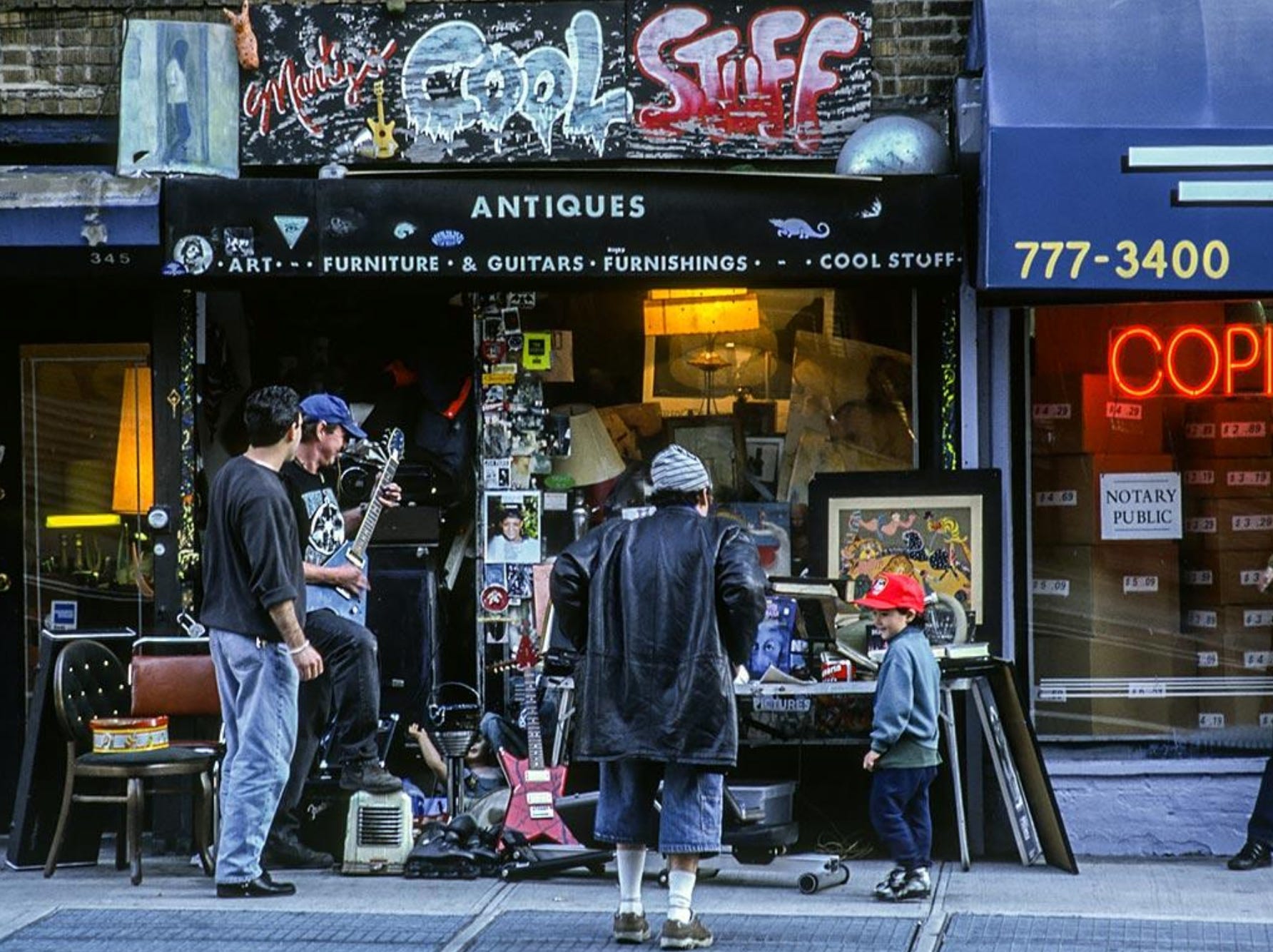
“Hey brother, what’s happening?” When I told him where I was going, he looked pained. “You sure you want to do that?”
“I’m just checking things out. My plan is to produce my own projects.”
“Okay, brother. Keep me posted.” I should have taken Marty’s negative reaction as a sign and gone home, but I was too jazzed. It was the first time I referred to myself as a producer. It made me feel good, like I was finally doing the difficult to define thing I’d always wanted to do.
After discussing a vague set of rules, I agreed to collaborate with PPAD on selling the Collins Concorde shirts. It was hard to understand, in the abstract, what the ‘rules’ meant. One thing I didn’t really understand was that PPAD had a ‘house style’ and projects had to be presented within that style. The PPAD logo was in this Brutalist font that was difficult to read. Everything else they created looked stuck in the ‘80s. The biggest thing for me was getting a modest salary. It would be a relief to not have to work shitty jobs as I hustled my passion projects.
Cindy Crawford wore a Collins Concorde shirt and promoted it on MTV’s House of Style. Back in New York, DIFFA (Design Industries Foundation Fighting AIDS) held an auction for the rest of the shirts and raised $200,000. The gross figure was $450K, but the profits got chopped up to cover event costs. Spending almost half the money to cover costs was exactly what I wanted to avoid. I could have done better than that on my own.
I was ticked off that I was no longer mentioned as the designer of the shirts; not on House of Style or at the auction. I didn’t want to be MTV’s slacker spokesperson, but I still wanted to have a voice. IBS said I wasn’t credited because the Collins Concorde shirts were now a PPAD project and that PPAD lets an artist’s work speak for itself. I reminded her that I was the artist responsible for the work. She countered that Phil Collins and Live Aid were the artists. I asked her if the Marlboro Man got artistic credit when Richard Prince appropriated his image for his famous Untitled (Cowboy) artworks.
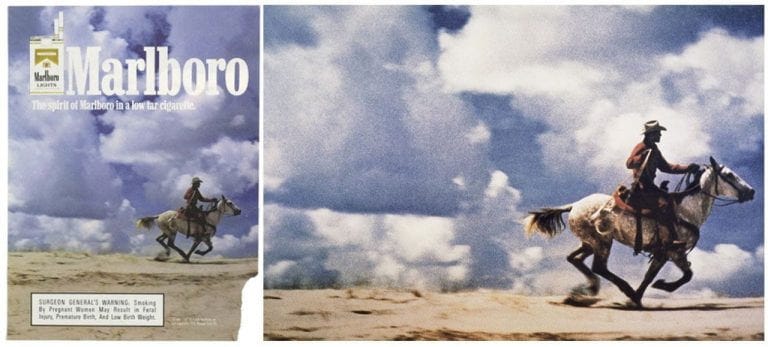
She scoffed that I was no Richard Prince. I think she was shocked I even knew who Prince was. I would never put myself on his level, but his process and mine were similar. He subtracted things from Marlboro ads – the logo, the slogan, etc. and cropped it differently to give the cowboy images new meaning. Instead of subtracting, I added the Concorde stencil to the Live Aid t-shirts to make it a commentary on pop culture’s obsession with spectacle. Everyone remembered Phil Collins flew on the Concorde, no one, except maybe Bob Geldof, cared if the millions of dollars raised helped those starving Africans.
To placate me, IBS said that ‘the people who know, know’. I guess that meant some small number of people who knew me, knew I created the design. What about the rest of the world? Her ego was the reality of PPAD’s house style. I got the sense she was desperate to be seen as a creative person. When PPAD got accolades, they accrued to her. She didn’t want anyone messing that up. I went along with it, because I had no idea how to stand up for myself and negotiate better terms. I’d lived in New York for four years, but sometimes it felt like I just stepped off the Bolt Bus from Philly.
I hoped, at the very least, I would get a salary bump or a bonus. IBS said it didn’t work that way. The Collins Concorde revenue was PPAD’s. To back that up, she said that if a nonprofit pays an employee more than $50K/year it triggers an audit from NY State. That sounded odd. Museums were nonprofits. They paid their directors tons of money. Finally, she reminded me that she didn’t draw any salary from PPAD. In my mind that should make it easier to pay me a little more. For her, it was a way to end the conversation.
Getting screwed out of credit and compensation on Concorde Collins was the beginning of a pattern that would repeat for years. Later, I learned that much of what IBS said was Incredible Bull Shit. The t-shirts had no copyright issues. I wasn’t manufacturing and selling bootleg t-shirts. They were originals I already owned. I could do whatever I wanted with them. The IRS had this Form 990 where they look at excessive compensation paid to officers and high-ranking employees at nonprofits. That was not me. My incredibly low salary could have doubled or tripled and no one at the IRS would have cared.
I knew my Imposter Syndrome was no match for IBS’ Smartest Person in the Room Syndrome. The funny thing is, she didn’t realize I was aware of the dynamic. She had no clue how subversive imposters could be. Her #1 rule was that she got a lead producer credit on every project, even if she had zero involvement. I made sure she had zero involvement by keeping my projects undercover until they were nearly finished. I didn’t need or want her antiquated input. IBS saw PPAD as a lofty conceptual art project. I treated it more like a goofy autograph signing at a sports memorabilia shop. Philadelphians loved that kind of thing, especially if Pete Rose showed up to piss off the purists. I was determined to put my own stamp on things. I embraced being the Peepad guy.
2000
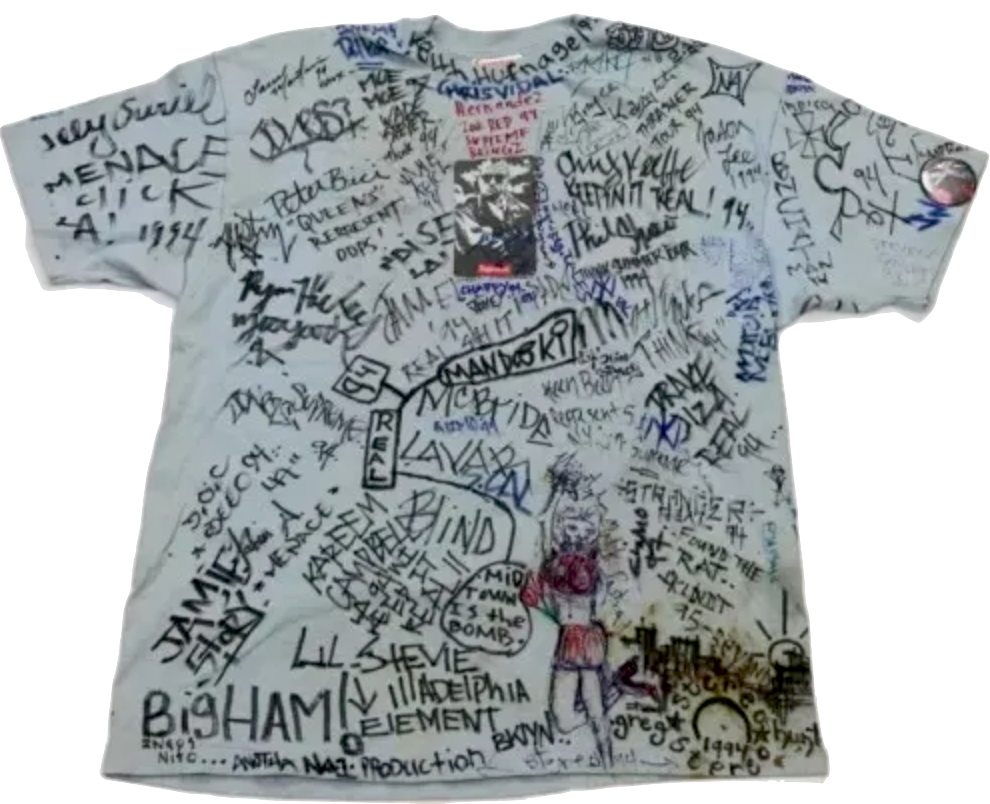
The Downtown art world had changed. The big-name galleries left Soho for West Chelsea. The skate shop, Supreme, at 274 Lafayette was the new center of energy in the hood. Aaron Rose’s Alleged Gallery, a few blocks east on Ludlow was also hype. I spent most of my time between those two hubs. Breakfast at Café Habana, lunch at Lovely Day, afternoon coffee at Café Gitane. The streets of Nolita were the best place to run into people. Supreme had this ‘taxi-driver t-shirt’ that visiting pro skaters had signed over the years. I tried to convince Geo and Sammy to let me auction it off, but they wanted to hold on to it. I didn’t mind. The shirt looked like every skater who signed it also sweated in it for a week.
I started doing projects with records labels, like Mo’ Wax, the British trip-hop label and Kid Robot, this NY store. People were getting into these Japanese inspired ‘adult toys’ and figurines. At first, I thought they were stupid, but every signed special edition I produced sold out in hours. Even my sneaker-obsessed nephew in Jersey knew about it. He said ‘Unc, the streets will never forget this drop!!’. People who know, know, right?
While the streets were percolating, the vibe in the PPAD offices was always tense. IBS’s assistants were earnest young women who probably thought PPAD would be a stepping stone into the world of arts administration. They quickly found out IBS was going to dominate anyone who entered her domain. They rarely lasted more than six months. I tried to be friendly to them, but they seemed afraid to talk to me.
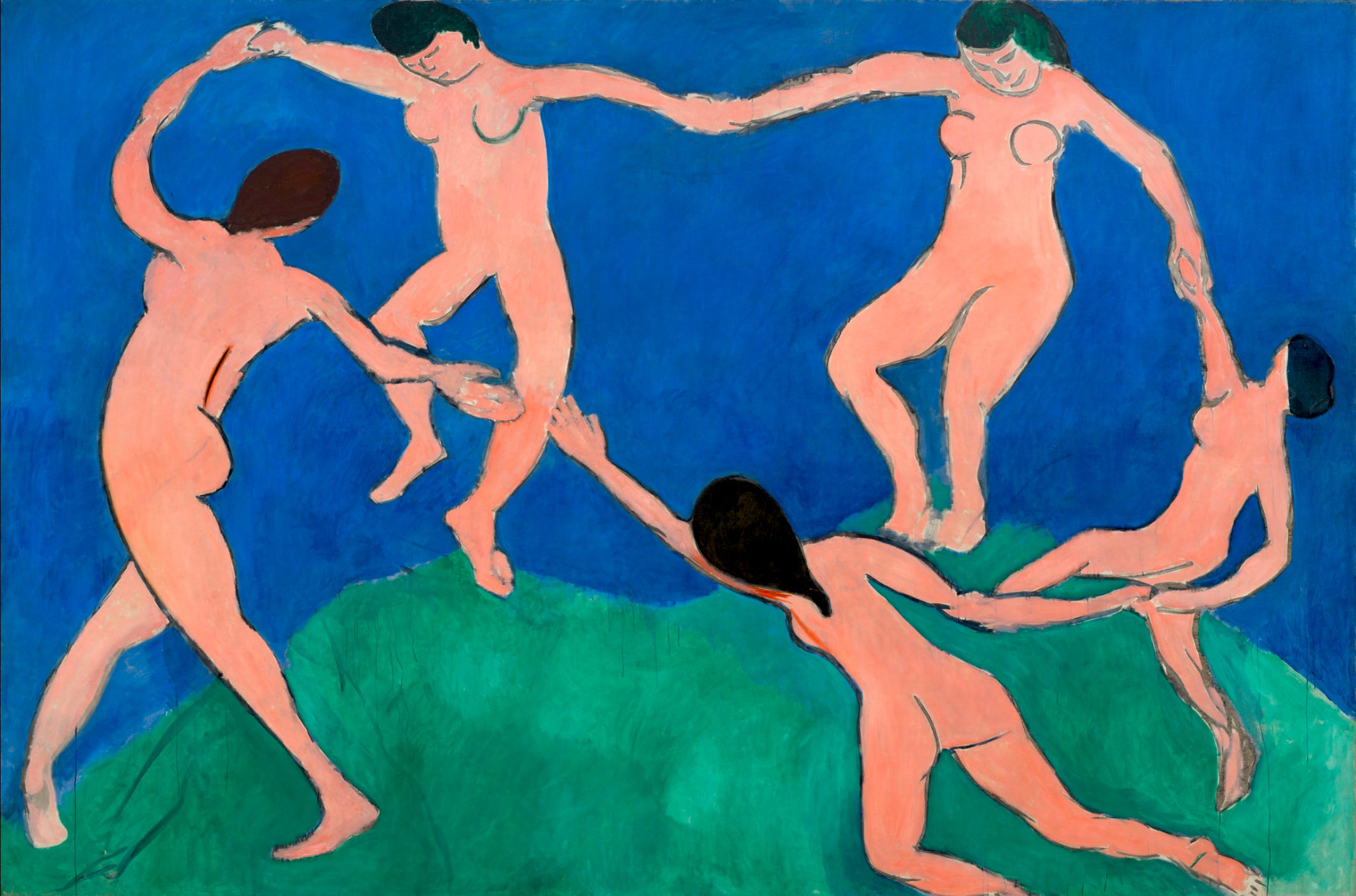
All hell broke loose when cultural critic Gary Indiana wrote a Village Voice cover story that lambasted arts organizations and nonprofits for not doing more to address the loss of lives to AIDS in NYC’s dance community. He specifically called out PPAD for having ‘Dancers’ in their name, but never, to his knowledge, had they lifted a toe to help the dance community. IBS was apoplectic about the article. I avoided the office for a few days. When I did go in, a rare thing happened; she asked for my input. I threw out the idea of having dancers dip their feet in paint and dance across long canvases on the floor, like a real-life version of Dance, the painting by Matisse. They could perform the signature moves of choreographers who’d died from AIDS related causes; there were so many: Alvin Ailey, Arnie Zane, Robert Joffrey, John Bernd and Michael Bennett, to name a few. I could visualize it; the long white canvas, dancers in flowing black outfits, their feet dipped in blood red paint. It would be a mixture of Japanese Shodo caligraphy and Jackson Pollock in a tutu.
IBS said ‘yeah….no’ and took a big poop on the idea. Since she was desperate, she tested my idea out on her drunk posse. They were a group of art directors, stylists and graphic designers who had done cutting edge work ten years ago and now seemed all but unemployable. When the gal pals loved ‘her’ dance-painting idea, IBS decided to go for it.
She planned to produce the dance-paintings at Industria, the West Village supermodel studio. Peter Lindbergh would photograph it. It became this expensive and overly complicated production. Of course, IBS’ friends would get paid to sit around, give opinions and drink mimosas. A few years back, Sophia Coppola and Spike Jonze produced an X-Girl fashion show on the sidewalk on Wooster Street. It was incredibly dorky, but got huge amounts of press and it was free. To me, that captured the DIY spirit of how to do things.
Annie, IBS’ current assistant, grabbed me outside of 51 Bleeker and begged me to come to the shoot. I politely explained it was the last thing I wanted to do. The look in her eyes was beyond the normal level of panic.
“I’m going to quit…. today.”
“Whoa, don’t do that. Get through the shoot and then leave.”
“I can’t. I’m losing my mind.”
“Let’s go to Time Café.”
“Irina will kill me if I’m not upstairs in five minutes.”
“I’ll deal with her.” As we walked around the corner I was surprised to see Marty in front of his shop. Usually, he didn’t open until the afternoon. He seemed a little shaky.
“Morning, Marty.”
“Hey brother, what’s happening?”
“Taking care of business.”
“Right on.”
“I’ll bring you a coffee on my way back.”
“Appreciate it, brother.” Annie couldn’t believe I was friendly with him.
“You know that guy? He always smells like…alcohol.”
“Not always. He’s a good person.”
Time Café was a few blocks up Lafayette. Soho people didn’t venture this far north in the morning. Even if they did, the dining room was huge so you didn’t have to worry about eavesdroppers. Def Jam’s Russell Simmons sat at the same corner booth every morning. Sometimes people greeted him, saying ‘what’s up Rush?’. I didn’t know the guy, so I wasn’t going to kiss his ring or whatever. Annie and I sat at a four-top in the middle of the room.
“What’s going on?” Annie bit her lip, put her face in her hands and started crying. When the waitress came over I ordered two iced coffees and two chocolate croissants and then also an omelette with spinach and a side of sausages. Emotional distress always made me hungry.
“I don’t know how to say it, so I’ll just say it. Irina has been trying to seduce me. Seduce is too nice a word, coerce is more like it.”
“What?”
“There were dinners at Nobu. We’d spend hours talking about me becoming PPAD’s lead producer. She bought me a new laptop and an iPod. It was so exciting and flattering. I felt validated for being smart. I didn’t realize what she was trying to do. Then, she got less subtle about it. It was psychological as much as it was physical. She’d come right up to the line, but never cross it. I told her I wasn’t interested. She’d criticize how I looked or talked and threatened to fire me. She would do this to my face or by leaving long messages on my answering machine. I’ve saved them all. Things would calm down, then the pressure would start all over again. I didn’t know who else to talk to about it, besides you.”
Fucking hell. None of this came as a big surprise, but it was still depressing. My mind flashed to Celia and all the other assistants who quit over the years. I wondered if they had similar experiences.
“What do you want to do, besides quit?”
“I’m thinking about filing a workplace harassment complaint, but I can’t afford a lawyer and can’t ask my parents for money. They would go apeshit and force me to move back home.
“Whatever you decide, I’m on your side. I know this doesn’t help or compare to what you’re dealing with, but I’ve barely been able to stand Irina since I first met her.”
“You get to do your own thing.”
“Yeah, but it comes with a ton of compromises. It’s turned me into a very grouchy person.” When the food arrived, I was too mad to eat. I asked them to box it up and add another iced coffee. Marty would appreciate a solid breakfast.
“What do you think I should do?”
“Go home. I’ll tell her you’re sick. Stay home tomorrow, too. Research what goes into filing a harassment complaint. Some lawyers will work on a contingency basis; meaning they only get paid when there’s a settlement.”
“Good to know.”
“Learn everything. It doesn’t change what’s happened, but it might help you feel less powerless. Forget about the shoot. I’ll go and be an opinionated asshole.” We walked to the Astor Place 6 train and said goodbye.
The next day I got to Industria early. I wanted to make sure they didn’t ruin the dance-painting idea. It took a few trial-and-error runs, but the foot-painting started to look pretty neat. I encouraged the dancers to leap, if that was in the choreography. In the white space of the canvas you could feel their movements. When IBS and the drunk posse started popping bottles and congratulating themselves, I slipped out. The sales of the paintings and photos eventually raised over a million dollars. I received no credit or mention, but I didn’t care. Ideas are easy. I was glad the money would go to people in need.
On Friday, I stopped by PPAD’s office to pick something up and Jay Jefferson asked me to attend a meeting. I didn’t want to stick around, but Jay gave me one of his ‘fuck my life’ looks. Irina started talking once we were seated.
“…I gave her all these opportunities and tried to promote her career. Now she won’t even talk to me. I think she’s depressed and addicted to prescription painkillers. I think she was obsessed with me.” Irina sighed and put her hands in her lap. “She may file a workplace harassment complaint. It doesn’t have to be sexual for someone to do that. The whole thing is so strange.”
It was the exact same bizarre speech she gave five years earlier after Celia quit. I don’t know why she felt the need to say anything, then or now. Was it to get ahead of the narrative in case Annie filed a complaint or just to set the story straight in her own head? I looked over at Jay. He raised his eyebrows, rubbed the back of his head. I couldn’t sit there and let the moment pass. As Irina got up to leave the conference room, I raised my voice in her direction.
“I talked to Annie.” I stared straight ahead, unable to look at her. “She’s thinking about her next steps.” I wish I summoned the moral courage to yell at her for preying on Annie and Celia, but I chickened out. I thought there was no point. Irina would be too well-defended. She believed her version of what happened and that was that. At home that evening, I found Celia on LinkedIn and sent her a cheerful hello. She wrote back a few hours later. After we caught up on the contours of our lives, I told her what had happened to Annie and asked her if any of it sounded familiar.
“Everything you described with Annie is similar to what Irina did to me. She had a harassment complaint against her when I joined PPAD. I should have never taken the job. She was verbally and psychologically abusive towards me; if I had let her, she would have engaged in a sexual relationship. There’s so much more - inappropriate gifts, controlling behavior, long phone messages signing my praises, or notes telling me why I’m a fuckup. You wouldn’t believe the crap she said; it was non-stop. There’s a name for it - coercive control. This is all to say, do not let any assistant or intern around her!”
I apologized to Celia for not being more helpful at the time. She said it was okay. She didn’t even know how to talk about what was happening. She just wanted to get as far away as possible. Like Celia, Annie never came back to the office. If she filed a workplace harassment complaint, IBS never mentioned it. Everything felt sordid and scummy. I knew it was time for me to move on to better things.
In interviews, Irina always said she’d be happy if PPAD went out of business; if all the problems artists faced were no longer problems. It was a great, noble sounding line. In fact, it was more Incredible BS. Irina had too much ego wrapped up in running PPAD to ever shut it down.
***
2010
I started producing music projects. Being the limited-edition autograph guy had run its course. Also, I wanted a clean break from anything related to PPAD. I worked my way up, producing thematic shows with different mixes of artists. I pitched a 25th Live Aid anniversary concert to the Brooklyn Academy of Music (BAM). They liked the idea, but asked me how it would work. The only approach I could think of was a punk rock opera thing. A singer, playing my Uncle Dan, would be an electrician who keeps coming onstage because the power goes out. Then, he’d sing punk or operatic versions of ‘80s hit songs on a dark stage. Uncle Dan had recently passed away. I couldn’t imagine Live Aid without thinking of him and how great he was. My idea was too personal and complicated to work at BAM.
I tried to think of other ways to turn Live Aid inside out. Then it hit me, a show featuring African artists covering U2 songs. It seemed to make sense, considering Bono’s ongoing AIDS benefit work with (RED). BAM loved the idea, not least because it would be cheaper to produce and they could pair it with their Dance Africa program. Shawn, a friend out in LA said he wanted to make an album out of the concert. I invited him to co-produce the show. I thought the artists would fight over the same three or four U2 hits from the 1980s, but they surprised me by going deep into the band’s catalog, including a handful of recent songs. Love runs deep for the Dublin homies.

On opening night, I wore my original Collins Concorde shirt onstage while introducing the show. I told the audience tonight’s show was a tribute to my dear Uncle Dan who got me started in music. The soulful voices of the artists brought out the soaring soulfulness in the iconic songs. I was so happy I cried through some of the show. I got so carried away I forgot I was wearing this toupee. I put it on after my on-stage introduction . Since I am still a socially awkward dork from Philly, I thought it would make me less recognizable so I could avoid talking to people after the show. I will always feel like an imposter, but now I know how to have fun with it.
At the after party, Rachel, my artist liaision buddy at BAM, grabbed me and pushed me through the crowd. We reached the VIP area where I saw Joe, BAM’s creative director and a few other important looking people. Rachel kept shoving me into the group and I found myself face to face with …. Bono. I had no idea he was going to be there. In his unforgettable (fire) voice he said.
“Are you the fucking guy who made the Collins Concorde shirts? I wanted one of them…”
“I’m the fucking guy?! No, you’re the fucking guy and the only way you’re getting a Collins Concorde is if you pay for it.” I must have been out of my mind to be shouting at Bono, in a fake Irish accent, no less. Bono smiled and reached into his front pocket. He pulled out a wad of bills, I mean, a really fat wad of bills and pressed it to my chest.
“How’s this?”
“You can’t buy me, Hewson!” I used his real last name for old school gangster emphasis. “The only man I’d give this shirt to is Phil Collins.” Bono stared at me. I stared back. Bono squinted. I squinted. I noticed I was slightly taller than him. Finally, he spoke.
“You’re in luck, mate. Phil and Genesis are being inducted to the Rock Hall of Fame at the Waldorf tomorrow night. Me and The Edge are going. Come as our guest…” I could see Bono’s lips move and I could hear what he was saying, but my brain was hijacked by someone I saw over his shoulder. It was Saskia.
I pulled off my toupee, handed it to Bono and slid past him. Saskia looked the same, but better. She smiled. I smiled, too as I reached out to hug her. She whispered in my ear.
“You’re still an artist.”
“I’m just me. You’re still…enchanting.”
“I’m just me, too.”
“Before we get into the whole ‘how are you and why are you here’ thing, do you want to join me and Bono to meet Phil Collins tomorrow night?”
“On the Concorde?”
“No, at some midtown hotel, but we can go anywhere after that …”
We had an incredible time at the Hall of Fame event. Abba, Jimmy Cliff and The Stooges were also inducted. When Bono was busy being Bono, The Edge, who was incredibly nice, made sure we met Phil Collins. Phil was gracious and funny; exactly how I thought he would be.
“Ah, yes, I vaguely remember hearing about the shirts. Flying on the Concorde was embarrassing, then and now. Not as embarrassing as Bono’s mullet at Live Aid, but close”
“I didn’t mean to pick on you with the shirts. I was trying to impress a girl.” Saskia squeezed my arm. “Your music got me through a lot of tough times as a kid. Your songs are so cool and are still my favorites.”
“I sold a lot of records, but I don’t think anyone ever considered me cool.” I couldn’t believe Phil said that.
“Are you kidding? Uncool kids, like me, needed a musical hero. You were the guy. Your voice was so powerful. It made me feel like I had a voice, when I didn’t. Young kids are getting into your music now. They want soulful songs. You’re a style icon, too. People are wearing pleated pants and sports jackets. But, none of that matters. You’re Phil Collins.” I started crying. Meeting him and having to convince him he was cool was overwhelming. Phil gave me a big hug, then passed me over to Saskia who took over hugging. Phil smiled and said I was in good hands as he walked to the backstage area, just like he did at Live Aid.
Outside the Waldorf, limos were lined up and down the block. We found Bono or rather heard him singing vocal scales. He said he was heading down to Paddy Reilly’s to join this local band, Rogues March for a set of Pogues songs. Behind Bono, I could see The Edge shaking his head; as in ‘you don’t want any part of that’. Bono singing Pogues songs at an Irish bar in New York? It would probably be like Springsteen at the Stone Pony; you’re not walking out of the bar until the sun rises. We told Bono it was past our bedtime and said our goodbyes.
***
There’s no escaping yourself, your shadow self. All the fears and insecurities you don’t want to deal with are always there, waiting for you. I thought working with PPAD would be a solution to my anxieties around becoming a producer. I thought it might be a way to only do the ‘fun’ stuff. It was to an extent, but it came with a lot of frustrations, which turned me into a negative and defensive person. I didn’t know how to change it because I kept avoiding my own issues. It was no one’s fault but my own.
That said, having a boss who actively thwarted my ambitions and aspirations did not help. Thwart is beautiful word. It means ‘to oppose successfully : defeat the hopes or aspirations of’’. It feels like the most correct word for my PPAD experience. It’s the only word I know that starts with the letters ‘thw’ and ends with the word ‘art’, which seems appropriate. I’ve learned a lot over the past 10 years of doing my own thing. It’s been a lot of fun, too. I kick myself for not blasting out on my own sooner.
Saskia was at the Africa U2 show at BAM because she worked for a Boston based management company that represents a few of the artists. She was thinking of moving to Brooklyn to open a satellite office. I told her it was a good idea, Brooklyn was booming, so many new clubs were opening. All this pointless business nonsense. Finally, finally, finally, I gave voice to tell her how I really felt. I said I would be the happiest guy in the world if she moved here. All it takes is one good person to make life incredible and she was that person for me.
***
Good story. Always surprised to learn a little something new about you. Keep writing and sharing.
Good one. Your pathway through the arts would make an excellent memoir. Cheers, Paul!