

Clive and I
Getting to know Clive Davis while producing No Alternative.

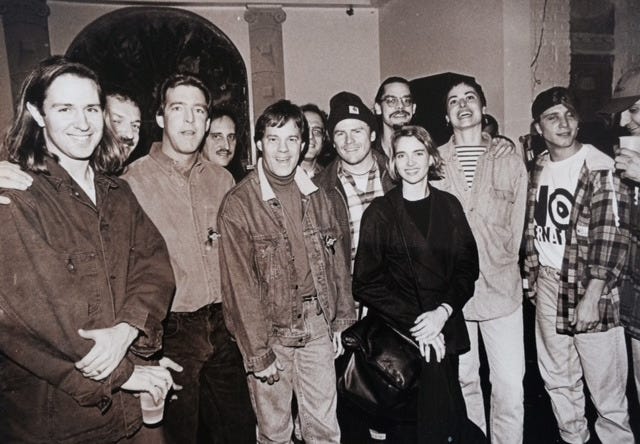
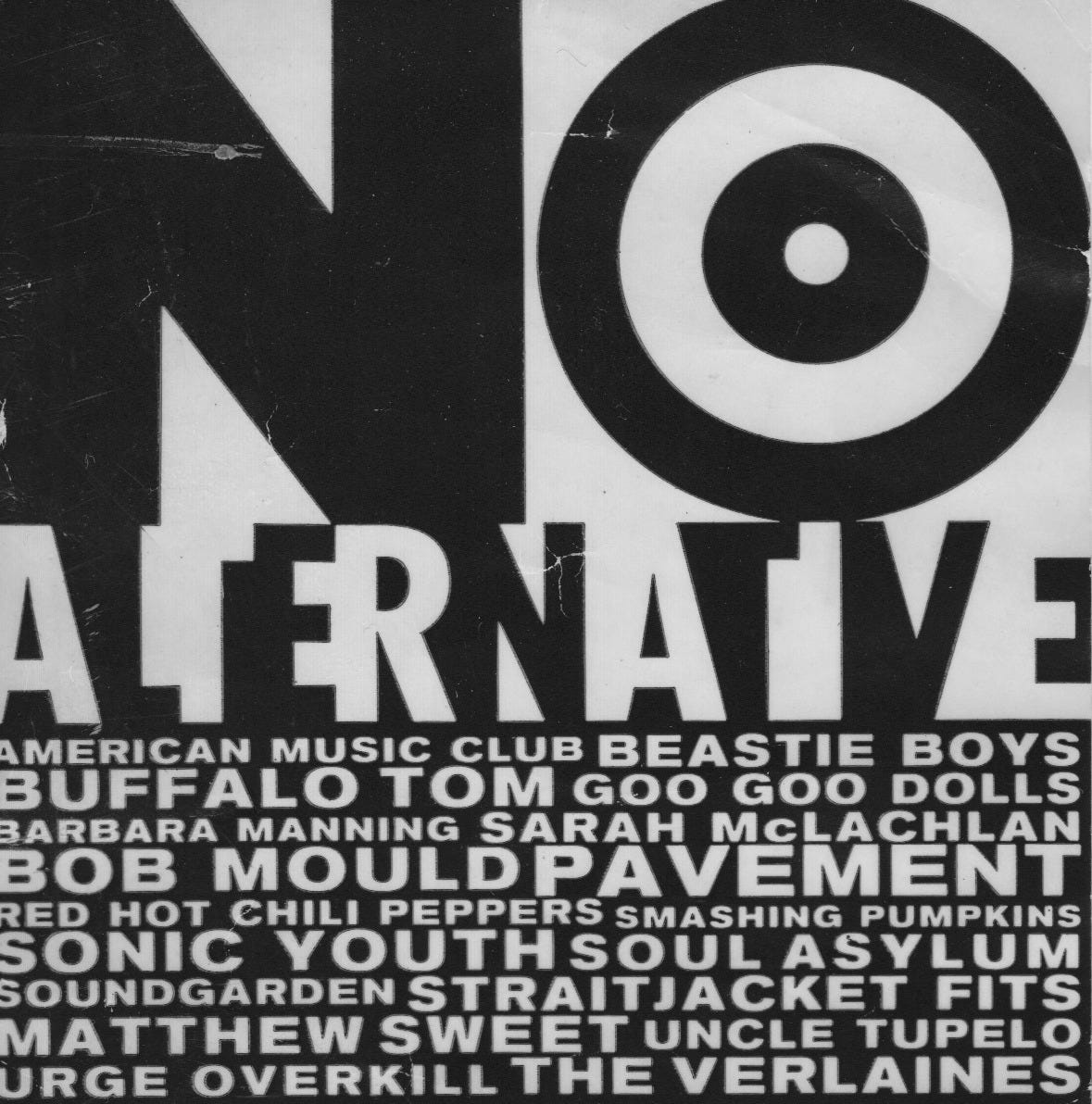
In the early ‘90s I spent two years developing an AIDS benefit album that was eventually called No Alternative. I had tremendous support from my co-producers Chris Mundy and Jessica Kowal. Our first record label meeting was with Richard Sweret, an A&R person at Arista Records. Five of us jammed into his office and talked about the album. Within a week we had a record deal. It was an exciting time and my first experience in the music industry. There were many more meetings at Arista and I soon found myself talking to Arista founder and president, Clive Davis, on a weekly basis. Clive wanted bigger names on No Alternative. He would call to check on the progress of getting Pearl Jam, REM or Red Hot Chili Peppers. He’d also question if we needed certain less-well-known bands like Pavement. He was always charming and subtly insistent. I told him we were doing our best to convince these bands and that yes, Pavement was an important band; to me at least.
I went out to Los Angeles to attend the MTV‘s Music Video Awards show on September 2, 1993. On the morning of the VMAs, not knowing what else to do with myself, I hung out at the pool at the Chateau Marmont with my co-producer Chris. The fashion designer Marc Jacobs, who I knew slightly from NYC, appeared and joined us. A few minutes later, Evan Dando, of the Lemonheads, showed up. Evan didn’t know any of us, but he walked over and wanted to hang out. I assumed it was the kind of thing that happened all the time in LA. We ordered a six-pack of Rolling Rock, even though it was barely lunch time.
At a certain point, a hotel concierge came over to say Clive was on the line. I bolted into the lobby and almost slammed into Helena Christensen, the model. The concierge said the call was routed to the phone in the cabana by the pool. I wanted to tell Helena that a year earlier I served her espresso and chocolate cake when I was a barista at Industria photo studio, but there was no time for coffee talk. I apologized to her and ran outside. I couldn’t believe I was taking calls from Clive at the cabana phone. He was curious about how it was going with getting the Chili Peppers. I told him it was a work in progress. The RHCP were managed by Lindy Goetz, who was a laid back, old-school kind of manager. He was trying to get us a song the Peppers had played live on the Grammys. It was a medley of their hit song “Give It Away” and Parliament Funkadelic’s “One Nation Under A Groove” . In the end, NARAS, the organization who produce the Grammys, were too stingy and wouldn’t release the track. I wish I’d asked Clive to call them. He might have convinced them to give it away, give it away now.
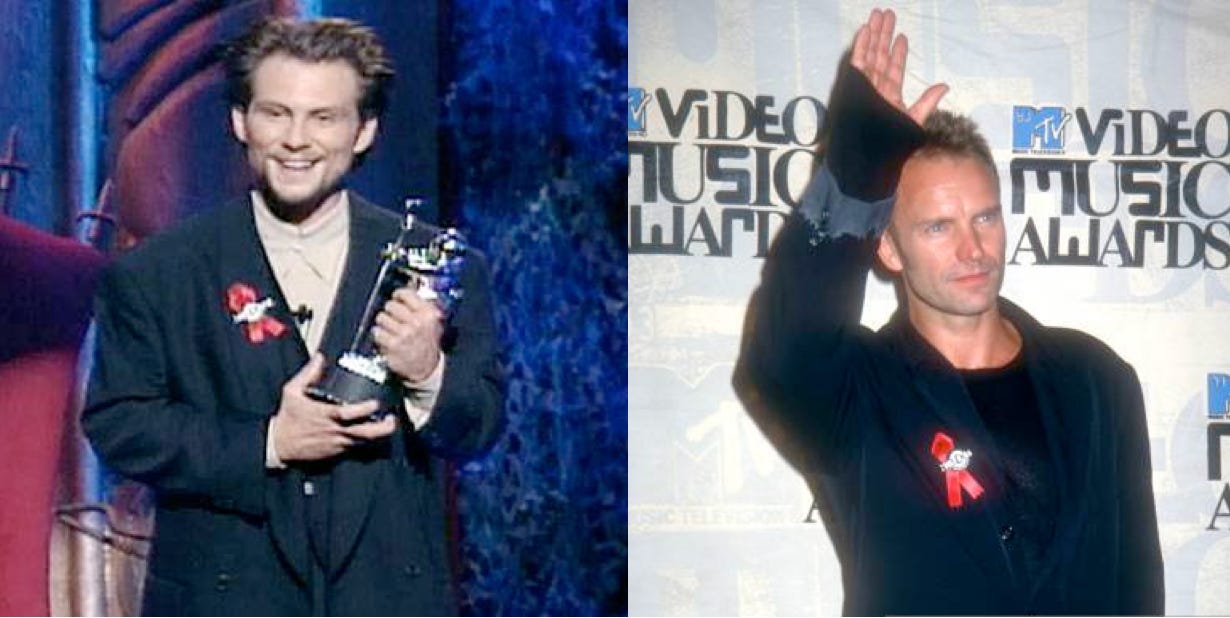
The VMAs were a weird event. All the big artists I wanted on No Alternative were there, hanging out backstage, but I couldn’t just walk up and pitch them. It’s the last thing they wanted to hear about. I was introduced to some artists, like Sting. He was not impressed. I wasn’t either. Sinead O’Connor was nicer, but she seemed like she wanted to disappear more than I did. Making things worse, we had produced these tacky NoAlt AIDS red ribbons. Red ribbons were supposed to be a solemn, understated thing, a way to show support for people with AIDS. Turning it into a branding opportunity was not the best decision. A few presenters wore them, including Christian Slater and …Sting. Thanks, guys.
No Alternative managed to be successful, despite not featuring Pearl Jam, RHCP or REM. One cool late addition was Patti Smith’s “Memorial Song” an acapella tribute to Robert Mapplethorpe. She sang it at a poetry reading at Summerstage in Central Park. The show was Patti’s return to the stage in NYC after many years away. Clive loved Patti and was happy to let us use the recording. That said, he requested we increase the applause at the end of the song. In the actual recording, when Patti stopped singing there was polite applause. I think people were stunned that she had sung this unknown song. We used the roar of applause from after “Piss Factory”, one of her most famous songs. Many years later, I did the same thing when I produced a concert video for a world famous comedian. I remember telling the editor ‘if Clive were here, he’d want a big burst of applause after that joke.’ It was much better that way.
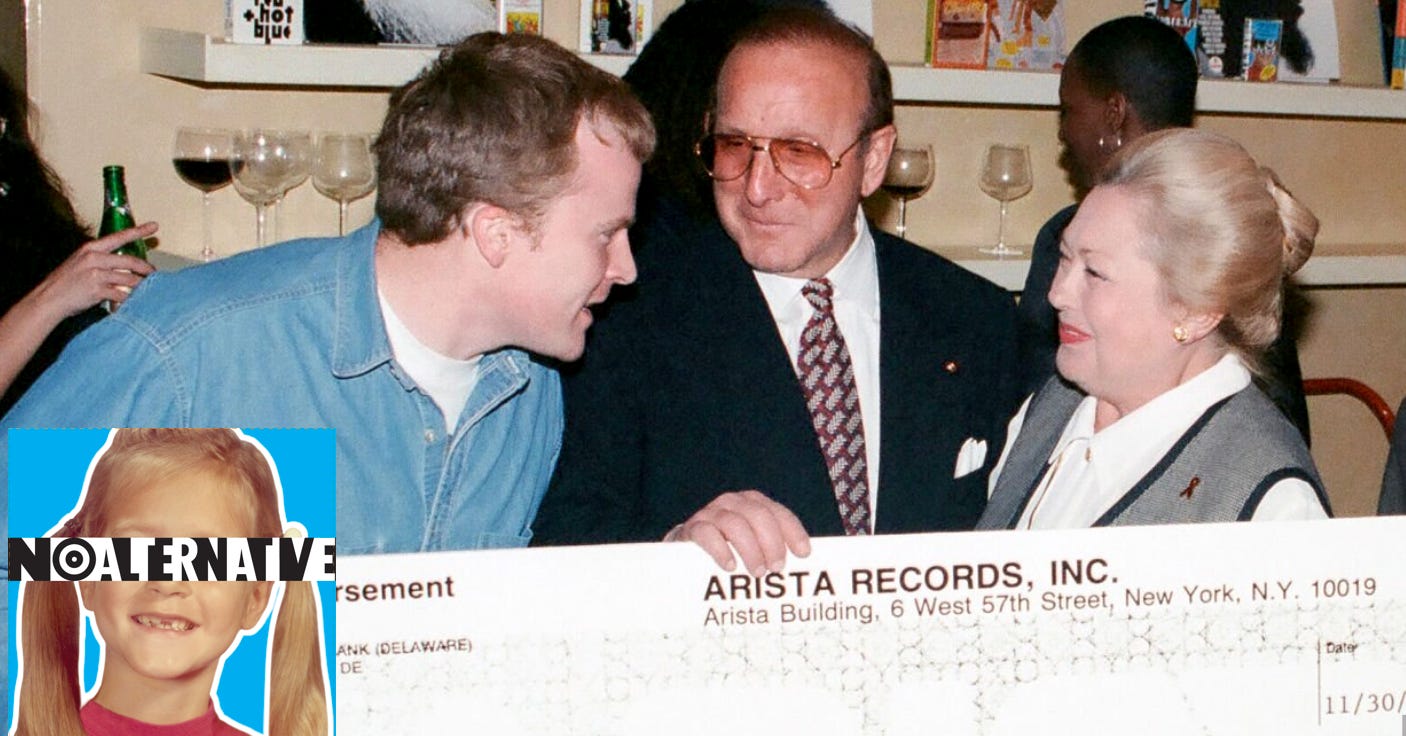
Six months after the release of No Alternative, Clive presented me with a check for one million dollars from the sales of the album. By all accounts the album was a great success. Of course, there is always the feeling that it could have done better, but what it did achieve was pretty darn good. A few weeks later, Clive called to ask if we could meet. I went up to Arista’s offices at 6 West 57th Street. After some chit-chat Clive asked me if I was a student of the music industry. I said I tried to be. I loved learning as much as I could about how it all worked. He then reached under his desk, held up some CDs and asked me if I knew the bands Sebadoh or Built to Spill. I was shocked. I said I did know them because I was working on a new album that would feature both bands. Clive offered me a job as an A&R person.
I spent the next year going out to see bands and sending reports and cassette tapes back to Clive. He would call me or (snail) mail me brief notes, usually to say he didn’t hear hit potential. Doug Martsch from Built to Spill and I had an awkward Sunday brunch meeting with Clive and two of his top executives at the Four Seasons Hotel. Clive meant well, but the vibe was not a good fit for Doug. I went to see Sebadoh in concert all over the country. Lou Barlow, was polite , but had no interest in signing with Arista.
A major issue was that I’d lost interest in alternative rock. The genre was bigger than ever, but the bands had become derivative and formulaic. There were a lot of grunge-lite knock-off hits. I wondered if any of these bands would have sustained careers. That said, one hit is better than none. Clive did champion Milli Vanilli, after all. At the end of my A&R contract, we parted ways. Clive, ever the optimist, said to keep in touch if I heard any artists with hit potential.
It was always great running into Clive over the years; at concerts or late dinners at Balthazar. He may have been Mr. Davis to most people, especially his employees, but he was always ‘Clive’ to me; the same buoyant and enthusiastic guy I met in 1993. Bumping into him reminded me of my younger, more idealistic self. I’ve heard from friends that he had a....tough side and could tank an artist’s career. I have no doubts or illusions about that. He was an ultra-competitive executive in the brass-knuckled music business. He’s prominently featured in the classic book Hit Men: Power Brokers and Fast Money Inside the Music Business; so, of course he had an egotistical ‘fuck you’ side. If No Alternative had not been a success, I don’t know if Clive and I would have remained chummy. But, hey, it was a success. As Clive once told me ‘it’s great when you have hits….’
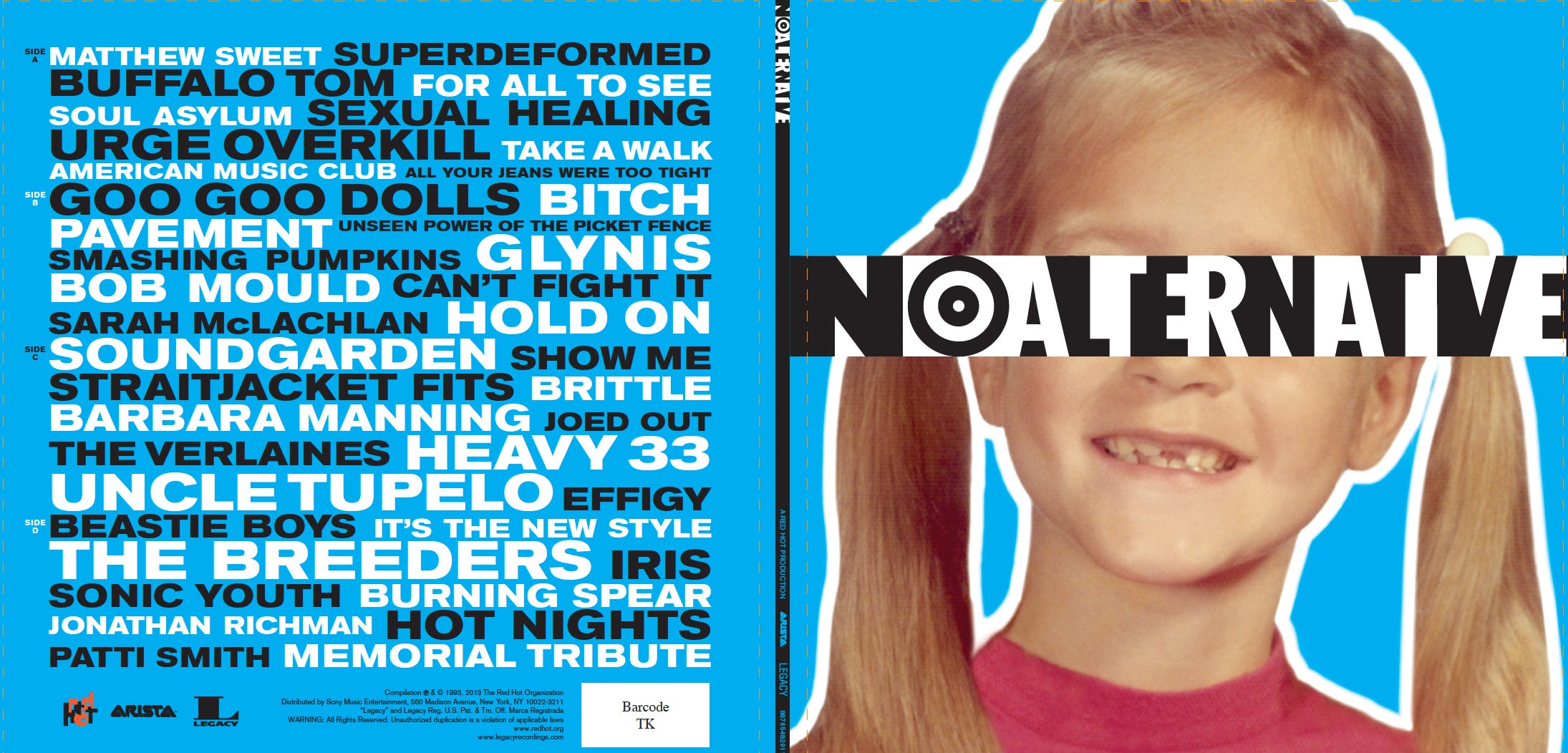
In 2013, with Clive’s blessing, I produced a reissue of No Alternative. It was the first time the album would appear on vinyl. Back in 1993 CDs and cassettes were considered the musical formats of the future. I asked Clive if we could do an interview together to talk about making the album. We had a nice chat in the penthouse of the Sony Building. Clive held the album in his lap and looked over the track listing and credits. I also showed him this promo sticker we made for the album. Clive was still mad that Pavement’s name was so much bigger than other artists. On Record Store Day 2013, the NoAlt reissue sold out in about ten minutes. That was gratifying. The vinyl reissue gave the album a renewed afterlife on social media. It’s still nice to see so many people posting about it after all these years.
There have been times when I’ve regretted not taking the opportunity to work closely with Clive more seriously. I tried my best at the time. Finding artists with hit potential isn’t easy. I was not drawn to the kind of manufactured pop that would come to dominate the rest of the 1990s. Not that those boy bands and female pop singers would have been easy to sign. I’m grateful to Clive for agreeing to release No Alternative, twice. That was more than enough. Getting to be an A&R for Arista and chatting with him about new bands for a year was icing on the cake. He had a long and illustrious life. I’d say rest in peace, but I imagine he’s already looking for hits in the afterlife.
***
I’m seeing so many takes on Clive Davis. Anyone trying to minimize his importance has to reckon with the fact only impactful people receive this kind of retrospective coverage.
I suspect I fall on the side of those who think that impact on music was a net negative. However, it’s best to maintain a generous view in the immediate aftermath of someone’s death — and here’s a good one.
Thanks for giving it away, giving it away now, for us to enjoy. Beatwater has put out some hits from this spot and you inspire us and i hope my Beatwater children! Thanks Paul